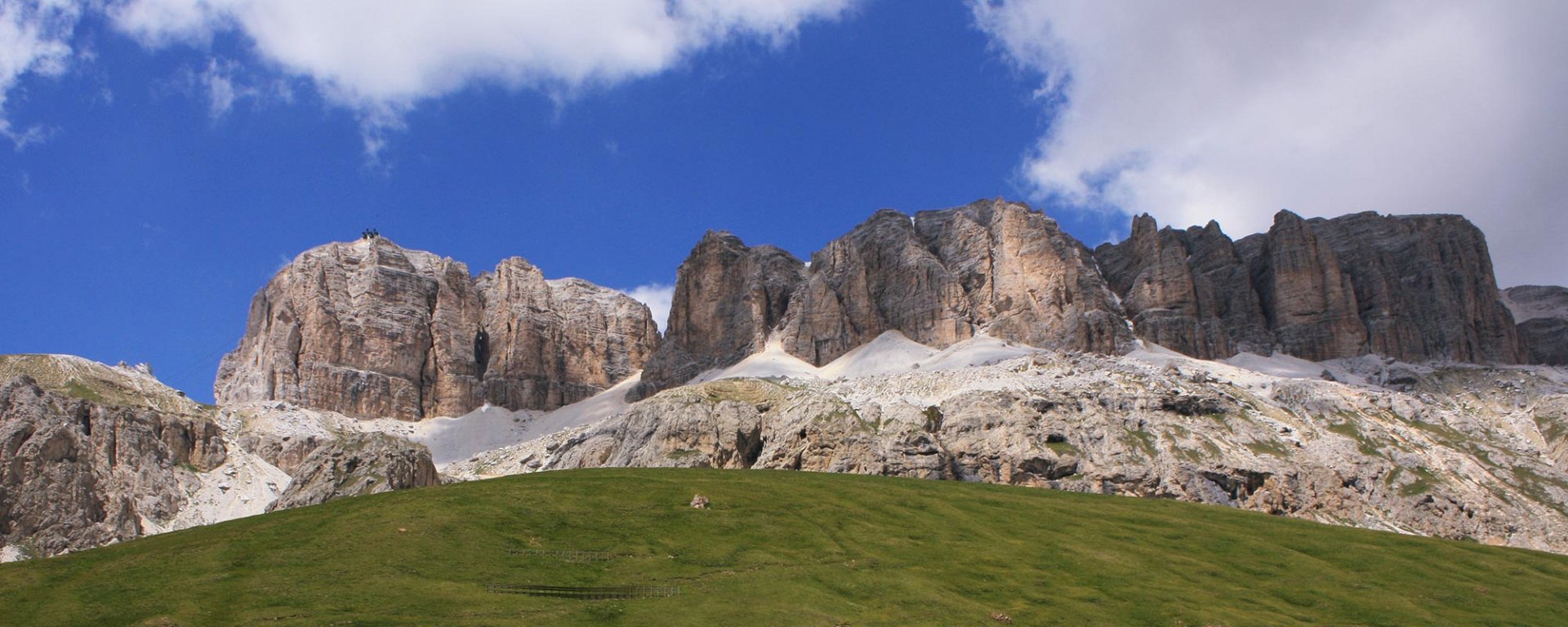
VAL DI FASSA: holiday in the Dolomites area

www.fassa-hotel.it

Selected hotel in the Dolomites:
La Casies mountain living hotel
DOLOMITI DOLOMITI DOLOMITI DOLOMITI DOLOMITI DOLOMITI DOLOMITI
DOLOMITI
VAL DI FASSA: holidays in the Dolomites area Soraga - Arte - Exhibition of the Artist Tiziano Franchini :: Cultural Evening about the ladin Carnival - Cultural Evening about the ladin Carnival in Campitello di Fassa :: 
VAL DI FASSA: holidays in the Dolomites area


Val di Fassa:


VAL DI FASSA: holidays in the Dolomites area
VAL DI FASSA
DOLOMITI TOUR: vacanze nel regno delle Dolomiti
VAL DI FASSA: holidays in the Dolomites area
DOLOMITI TOUR

Localities in the Fassa Valley


Moena

The toponym of the village derives from the term "molliana", meaning “swamp” and indicating the typology of the territory on which Moena was founded. Moena is considered the first town of the Fassa Valley and marks the ideal border with the near Fiemme Valley, (its past administrative center and present link). Moena is positioned on a splendid natural alluvial hollow and surrounded by some of the most impressive Dolomite mountains, among which we can mention the “Latemar”, the “Valaccia” and the green meadows of the “Costalunga Pass”. Moena is today the most populated centre in the Fassa Valley. It is well known both in Italy and abroad as “The Fairy of the Dolomites”. The architectural style of the town appears very elegant and fashionable and its centre is enriched by beautiful and furnished shops. The village has in fact turned into an important tourist resort offering first-class structures and renewed restaurants. Among them we have to mention the restaurant “Malga Panna”, cited in the Michelin guide. Moena pays much attention to the local cookery tradition and since some years it has been hosting the successful gastronomical events "A cena con re Laurino" (Having dinner with King Laurino) during the month of January and the "Settimana del Fungo" (The Mushroom Week) in September.


Pozza di Fassa

In Ladin language "poza" from the Latin word "putea", puddle. It indicates the natural depression where water naturally flooded. The village is placed in the widest point of the valley and at the confluence point between two torrents: the “Avisio” and the “San Nicolò”. The village benefits from its large territorial extension, a wide hollow towered by the mountains “Cima Undici” and “Cima Dodici”. Excursions, hikes, climbing, geology, the renewed panoramic skiing area “Buffaure” but most of all the perfect mix of green meadows and pure air, assure a faithful touristic demand. The municipality of Pozza is also composed by the hamlets of Pera, Meida e Moncion. Pera, in particular, was the native place of Tita Piaz, the unforgettable and extraordinary talented climber, also known with the name of "Diavolo delle Dolomiti" (The Devil of the Dolomites). He was the protagonist of once retained impossible ventures, on the pinnacles of “Catinaccio” and of the “Torri del Vajolet”. The neighbouring skiing resort named “Aloch”, has the peculiarity of been enlightened during the night: a real snow stadium endowed with slpoes for international competitions, trainings, high level races.

Pozza di Fassa


Vigo di Fassa

The toponym derives from the Latin "vicus", village. During the past this was the political, civil and religious centre of the old and independent “Comunità Generale di Fassa”, seat of Capitains and valley judges. The village is situated on a large natural terrace presenting a dominant position upon the valley and a panoramic sight going from “Cima Undici” and “Cima Dodici” to the “Marmolada”. The town is also positioned on a crossing that during ancient times, led the traders from the Fassa Valley to the Tyrol territories through the “Costalunga Pass”. Vigo, both in summer and winter time, is the privileged starting point for dozen of excursions to the “Catinaccio”. Through its modern cableway “Catinaccio” you can reach the natural terrace of “Ciampedìe” (1998 m), representing a platform of rare beauty on the surrounding mountains: a 360° view from the “Catinaccio” to the “Pale di San Martino”. The skiing area “Ciampedìe” is the hub for enjoyable days on the snow, during winter season, satisfying the different needs of each skier.

Vigo di Fassa


top


Campitello

The ladin toponym of the resort “Ciampedel” derives from the Latin word "campus" meaning “glade, open space, free from vegetation and plants”. The village is towered by the imposing massive structure of the “Sassolungo” and from the “Col Rodella”. From this last one, at a height of 2404 m, one of the most charming mountain sceneries of the Dolomites opens itself to your eyes. Just a few minutes time divide the top of the mountain from Campitello, thanks to a speedy and capacious cableway departing from the “Ischia” locality. In winter “Col Rodella” offers various and interesting skiing possibilities in the skiing area “Col Rodella/Belvedere”. The area can rely on modern ski-lifts on an up-to-date snow covering system which guarantees the best skiing results from the earliest beginning of the season. From the “Col Rodella” you can easily reach the ski-lifts and the ski-slopes going from the Sella Pass to the Gardena Valley and the Sellaronda circuit. In summer this is the ideal starting point for hikes, leading to the “Sassolungo”, the “Sasso Piatto” and the “Sciliar” tableland. Because of its privileged position, the name of Campitello has been widely renowned in these last years as a famous Alpinistic Centre. The town has been chosen as seat of the "Ciamorces de Fascia" (Chamois of the Fassa Valley), the legendary alpine guides of the valley, which numbered among them the famous guide Tita Piaz. Campitello is situated at the end of the Duron Valley, which was known in the past as the "Wine and Salt Road ", because of the steady passage of tradesmen going to the “Siusi” territory through the “Giogo di Fassa”.


Canazei

The ladin toponym "cianacei", derives from the Latin term "cannicetus" ,”place where marsh plants grow”. Till the beginning of the century this antique mountain centre was known as one of the poorest villages of the valley because of its geographical isolation. On the contrary, nowadays Canazei, together with its four hamlets Gries, Chieva, Alba e Penia, although not very populated, has reached a national and international importance as one of the most attractive tourist resorts for the winter season. For these results the village has to thank its strategic position at the crossroads of important passes like “Pordoi”, “Sella” and “Fedaia”, but also the modern ski-lifts. All these characteristics, without forgetting of its direct connection with the Sellaronda circuit, contribute to give to this town the name of “Pearl of the Alpine Arch”. It is especially in winter that Canazei becomes the nerve-centre of the valley, populated by thousands of Italian and non- Italian tourists (mostly coming from the northern part of Europe). The village is situated in a particular natural basin, just under one of the most fascinating mountains of the Dolomites. Canazei has been witnessing a huge building expansion in the last decades, (see the number of available beds), but it has not forgotten its origins and Ladin traditions. A particular architectural style, as well as the popular customs, reveal a keen attention to the maintenance of local traditions: you will also see this element in dancing groups, theatre organisations and cultural studies. Furthermore, at the end of each season, all delegations of the nearby Ladin valleys join together in Canazei marching past in a unique original parade. This event, known as “Gran Festa d’Istà, is now a classic rendez-vous for the local summer tradition.

Canazei


top


Mazzin

The origin of the toponym is rather uncertain and controversial. Mazzin is the smallest municipality of the valley and it is composed by the neighbouring villages of Campestrin and Fontanazzo. The name of the centre is closely related to the finds of important ruins of human settlements in the locality “Doss dei Pigui”. Here lie some traces of a fortification belonging to the ancient “Reti”. Mazzin also preserves the sole example of rustic manorhouse of the entire valley: “Casa Battel” enriched by its cuspidated tower and noticeable tempera paintings on the corners and all around the windows.


Soraga

In ladin idiom "sorega" from the Latin word "super aqua", clearly defined the position of the village with respect to the “Avisio” Torrent. Soraga is considered one of the oldest settlements of the valley and once defined the boundary between the Principality of Trento and the one of Bressanone. To this last one belonged all the Fassa Valley with the sole exception of Moena. The town is situated just under “Piz Meda” and “Valaccia” at the foot of the the “Catinaccio” massif; surrounded by green trees and meadows. This characteristic Ladin centre cultivates peacefulness and tranquillity offering vast hike possibilities both in winter and in summer time. The long distance run lovers will certainly appreciate here a paradise of little streets while skiers will be helped by the local free ski bus to reach the skiing resorts they are interested in. Tranquillity, simpleness, and a good relation quality/price make of Soraga one of the most required destination for an unforgettable holiday.

top


Wellness hotels
in the Dolomites

Family Hotels
in the Dolomites

Last Minute

fassa-hotels.it: room request


Find with Find with GoSuedtirol - The search engine about South Tyrol

Copyright Altea Software

Useful information for your holiday in South Tyrol:


Lodgings Alta Badia

Lodgings Gitschberg

Lodgings Val Pusteria

Lodgings South Tyrol

Lodgings Val Senales

Lodgings Kronplatz

Lodgings San Vigilio

Camping South Tyrol

Lodgings Merano

Search engine

Lodgings South Tyrol

Lodgings Merano

Lodgings Val Venosta

P.IVA - MwSt 01587030212